Monday, January 17, 2011

ARIZONA PASSES FUNERAL PICKETING LAW—RESPONSE TO WESTBORO BAPTIST CHURCH

Last week Arizona passed SB1101 to address threats by the Westboro Baptist Church that its members would picket the funeral of Christina Taylor Green, a nine-year old victim of the Rep. Gabrielle Gifford shooting.  The new bill makes it a class 1 misdemeanor to picket or protest within 300 feet of the property line of any residence, cemetery, funeral home, church or other establishment, before, during or after a funeral.   

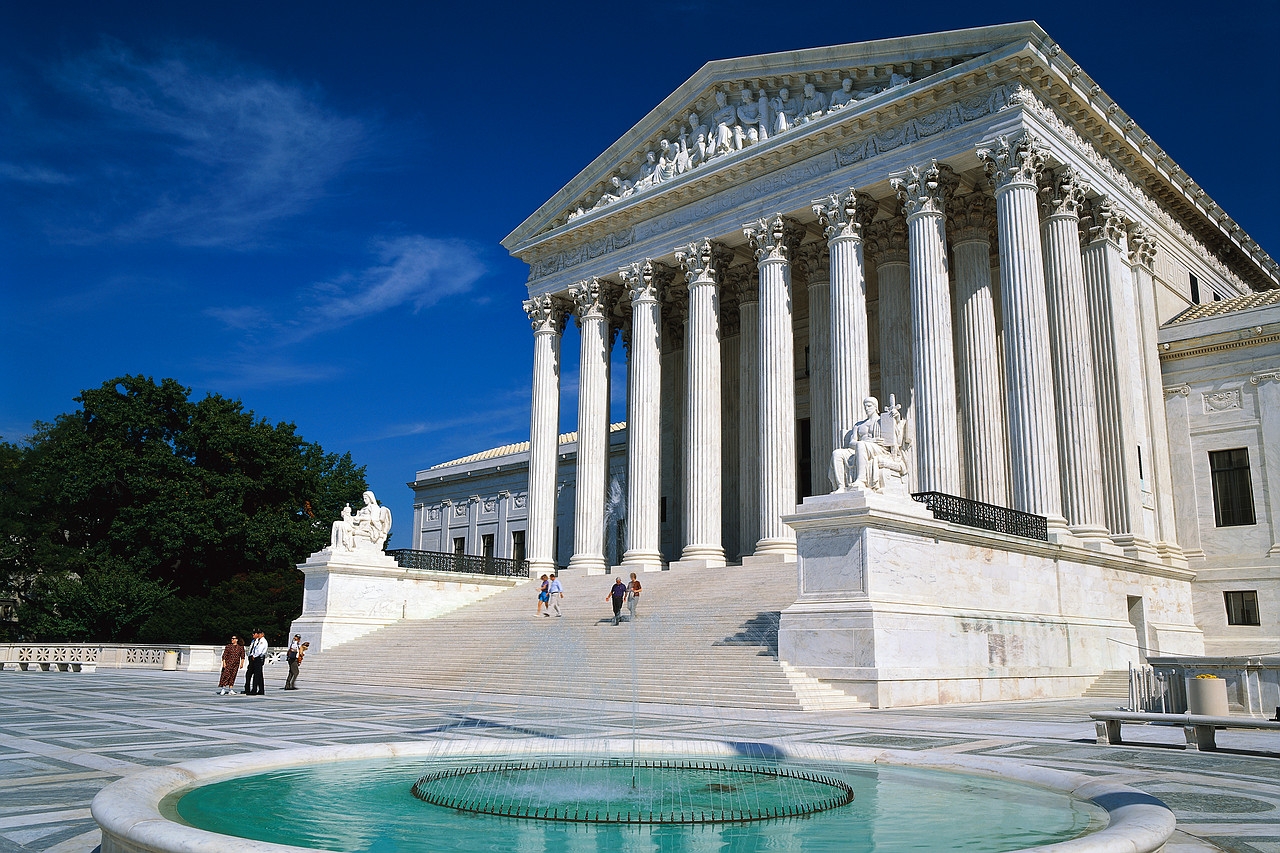
In October, I posted an article discussing the undecided U.S. Supreme Court case, Snyder v. Phelps, which regards a multi-million dollar emotional distress verdict spawned by a Westboro Baptist Church funeral protest.  In that case, Phelps and the Westboro Baptist Church argued before the U.S. Supreme Court that funeral protests are a protected form of the free speech.  Therefore, the multi-million dollar verdict against Phelps and other protester defendants should be overturned. 

The new Arizona law will have no effect on the outcome of Snyder v. Phelps .  However, the new Arizona law, SB1101, is related because it is designed to limit the type of speech that Westboro Baptist Church argued it was entitled to speak--funeral protests.  After all, SB1101 funeral protesters will be limited in the times of the protests and the location of the protests.  

So, does the new law violate the First Amendment? Answer: Quite possibly.  A similar funeral protest law in Missouri was found unconstitutional in August, 2010.  (A copy of the ruling can be found here.)  Arizona's law is a restriction on free speech.  Restrictions on free speech are Constitutional if the restrictions meet "tests" concocted  by the Supreme Court to guide lower court judges.  In the Missouri case, the Court found that law could not meet two of the tests:  (1) Whether the law serves a significant goverment interest, and (2) Whether the law is narrowily tailored to meet that interest.

These test are complex and beyond the scope of this ariticle.  However, from a practical stand point, the tests are designed to allow limits on speech that is disruptive to everyday society.  So, what makes speech disruptive?  Frequently govement regulations in the name of public safty are upheld. A good example would be a law that causes protesters to hold signs below a certain size and height so that the signs do not block street signs; or a law that causes protesters to not protest near street intersections so as to not interfere with traffic. 

We will need to wait and see whether this law becomes another hot button at the U.S. Supreme Court.  However, given the Missouri case, this law could once again put Arizona in the national spotlight. 

Tuesday, January 4, 2011

JULIAN ASSANGE OF WIKILEAKS—CRIMINAL SPY OR JOURNALIST EXERCISING RIGHT TO FREE SPEECH?


For some time now, Julian Assange, founder and editor of the website WikiLeaks, has been publishing U.S. government secrets that he allegedly received from an army private employed at the Pentagon. See article from Wall Street Journal. The army private allegedly downloaded thousands of secret and classified documents from his Pentagon computer and, thereafter, delivered the documents to WikiLeaks and its editor. Now people are calling for Mr. Assange to be prosecuted under the Espionage Act. See article from Wall Street Journal.

If you have not seen it, this is what the Wikileaks website looks like.  You can currently reach Wikileaks at http://213.251.145.96/

The Espionage Act makes it a crime for a person to be in possession of a U.S. government secret and transmit that secret to another party who is not entitled to receive it. Certainly in this case Mr. Assange is in possession of U.S. government secrets and has transmitted it, via the web, to the world. Therefore, at first glance there appears to be some justification for investigating further whether the Espionage Act applies to these acts.

The rub here is that the First Amendment right to free speech possibly trumps the Espionage Act. This blog post is not to make an opinion about whether or not Mr. Assange has violated the Espionage Act and/or is protected by the First Amendment. Rather it is to point out the similarities between the case of New York Times vs. the United States, aka the Pentagon Papers case, and let you determine whether Mr. Assange is protected by the First Amendment right to free speech.

In the Pentagon Paper case, the U.S. government sought to enjoin (or stop) the New York Times and other newspapers from publishing a classified study entitled, “History of U.S. Decision-Making Process on Vietnam Policy” and other government secrets. Just as in the Wikileaks matter, in the Pentagon Papers case a government informer revealed top secret papers to a third party, journalists. Thereafter, the Journalists sought to publish the secrets.

When the government learned of the Pentagon Papers leak, it sued to stop the publication on the theory that the publication would violate the Espionage Act. Lower courts enjoined the publication of the secret papers. However, when the injunction made its way to the Supreme Court, the Supreme Court ruled that the U.S. Government was not entitled to stop the publication of the confidential report.

Justice Black delivered the opinion of the court denying the injunction against the New York Times. In the opinion, Black states, “I believe that every moment's continuance of the injunctions against these newspapers amounts to a flagrant, indefensible, and continuing violation of the First Amendment.” Justice Black further states that the continued injunction “would make a shambles of the First Amendment.”

As if these words were not clear enough, Black went on to write the following:
Madison and the other Framers of the First Amendment, able men that they were, wrote in language they earnestly believed could never be misunderstood: "Congress shall make no law . . . abridging the freedom . . . of the press . . . ." Both the history and language of the First Amendment support the view that the press must be left free to publish news, whatever the source, without censorship, injunctions, or prior restraints.

In the First Amendment the Founding Fathers gave the free press the protection it must have to fulfill its essential role in our democracy. The press was to serve the governed, not the governors. The Government's power to censor the press was abolished so that the press would remain forever free to censure the Government. The press was protected so that it could bare the secrets of government and inform the people. Only a free and unrestrained press can effectively expose deception in government. And paramount among the responsibilities of a free press is the duty to prevent any part of the government from deceiving the people and sending them off to distant lands to die of foreign fevers and foreign shot and shell. In my view, far from deserving condemnation for their courageous reporting, the New York Times, the Washington Post, and other newspapers should be commended for serving the purpose that the Founding Fathers saw so clearly. In revealing the workings of government that led to the Vietnam war, the newspapers nobly did precisely that which the Founders hoped and trusted they would do.
Justice Black’s elegant words showed unequivocal support of a newspapers’ right to publish government secrets. Mr. Assange has published government secrets and for that there have been calls to prosecute him as a criminal. However, given the ruling of the U.S. Supreme Court in the Pentagon Papers case, is there any room to doubt that the press may publish a government secret? If Justice Black was writing the decision, what would he say about Wikileaks? Now that you have read the words of the constitution and the opinion of the Supreme Court, you make up your mind whether or not Julian Assange is a criminal or deserving of First Amendment protection.

Tuesday, December 14, 2010

ARIZONA'S EMPLOYER SANCTIONS LAW AT U.S. SUPREME COURT

The Supreme Court had arguments on Wednesday, December 8, 2010, on the case of Chamber of Commerce v. Whiting, which involves the Employer Sanctions Law of Arizona.  Arizona’s Employer Sanctions Law is among the toughest in the nation. The Law imposes sanctions on employers who hire unauthorized workers who work illegally in the country. It mandates that employers participate in the federal employment verification system called E-Verify, which verifies the work status of a worker.


Lower court decisions have upheld the Arizona’s Employer Sanctions law as constitutional. Based on these lower court decisions, it is anticipated that the Supreme Court will uphold the Employer Sanctions Law. However, opponents of the law, including the Asian American Justice Center and the National Immigration Justice Center, filed amicus briefs on the theory that the application of Arizona’s Employer Sanctions Law has a discriminatory effect and is unconstitutional.

This case is one to watch for the ongoing debate between the states and the federal government over the federal government’s handling of immigration.  The case will certainly act as a guidepost on how far the Supreme Court will allow states to intrude on immigration enforcement, a domain traditionally reserved for the federal government. 

While much has been made on both sides of the debate about what the U.S. Constitution says about immigration, it is interesting to note that the U.S. Constitution is incredibly brief on the subject.  Article 1, Section 8 of the United States Constitution, only requires Congress to "establish an uniform Rule of Naturalization."  Given the brevity of words, it is not surprising that we have so much debate on the subject. 

Thursday, December 2, 2010

TAKE AWAY THE KEYS—PARENTS LIABLE FOR CHILD'S CRASH

If you ask the Arizona Court of Appeals, parents may be liable for harm caused when their kid crashes the family car, even when the kid drives without permission.  The reasoning lies in the case of Young v. Beck.  That case is currently on review at the AZ Supreme Court.  Therefore, parents with driving children may want to watch this case carefully. 

The facts giving rise to Young v. Beck are typical of many households with teenagers.   Jason Beck, 17, was joy riding with his friends in a car provided by his parents.  On his way home, Jason crashed into Young who received serious injuries. However, the rub here is that the Becks told Jason that he could no longer have friends in the car because of a previous accident. He was only to drive the car to school, church, or work. Therefore, Jason did not have permission to joy ride as he did on the day of the accident.   

So, why are his parents liable?  Arizona follows what’s called “The Family Purpose Doctrine.”  The Family Purpose Doctrine simply says that a parent who “furnishes an automobile for the pleasure and convenience of the members of his[/her] family makes the use of the machine . . . [the parents'] affair or business, and that any member of the family driving the machine with the [parents’] consent, either express or implied, is the [parents’] agent.” See, Benton v. Regeser.  In other words, if you let your kid drive the family car, you are responsible if the kid crashes the car.

In Young v. Beck, the Becks argued at trial that Jason did not have express permission to use the car for driving his friends. Therefore, the Becks argued they should not be liable under the Family Purpose Doctrine. The Court, however, reasoned that the Becks gave Jason implied consent to drive the car for family purposes because Jason had permission to drive the car for many other purposes.

So, what’s the moral of the story? If you have an accident prone child, take away the car keys and deny him or her the right to drive your car. Therefore, when he or she crashes the car and subjects you to liability, you’ll have an excuse at Court why your disobedient child should be the only person responsible for the damage. But, that’s easier said than done.  Your other choice is to carry a huge insurance policy.